


Your roof quietly works away in the background every single day – keeping out rain, wind and cold, and protecting everything and everyone inside your home.
Because most of it is out of sight, it’s easy to ignore until something goes badly wrong. The good news is that many serious roofing problems start as small, early warning signs.
If you know what to look for, you can catch issues before they turn into leaks, damp or expensive repairs.
In this guide, we’ll walk you through the most common early signs of roof damage, what they mean, and when it’s time to call in a professional roofer like Direct Roofing & Cherry Picker Hire.
Why Catching Roof Problems Early Matters
A small issue on your roof rarely stays small for long. Once water starts finding its way through tiles, slates or flat roofing membranes, it can work its way into your roof structure, insulation and ceilings. Over time, this can cause:
- Leaks and water stains on ceilings and walls
- Rotting timbers and weakened roof structure
- Mould growth and musty smells indoors
- Peeling paint or damaged plaster
- Higher repair costs and, in extreme cases, the need for a full roof replacement
The earlier you spot these warning signs, the quicker and cheaper they are to put right. Think of regular roof checks as a small investment that can save you a lot of money and stress in the long term.
1. Check Inside: Signs of Roof Damage in Your Loft and Ceilings
You don’t always have to climb a ladder to notice roof problems. Some of the clearest clues appear inside your home.
Water Stains on Ceilings and Walls
Brown or yellowish patches on ceilings or high up on walls are classic signs of water finding its way in from above. These stains might appear after heavy rain or slowly get darker over time. They may not always be directly below the leak, as water can travel along beams and joists before showing itself.
Damp, Mould or Peeling Paint
If you notice areas of damp, mould spots, or peeling paint and wallpaper near the top of walls, it may be more than just condensation. A small, persistent leak in the roof can create a damp environment that encourages mould growth and damages finishes.
Light Showing Through the Loft Roof
If it’s safe to do so, have a look in your loft during daylight hours. Switch off the lights and check for any small spots of daylight shining through the roof covering where it shouldn’t. Tiny pinpricks of light can indicate holes, slipped tiles or damaged underlay.
A Musty Smell in the Loft
A strong, musty or mouldy smell in your loft may suggest trapped moisture, wet insulation or damp timbers – all of which can be caused by roof leaks or poor ventilation.
2. Look Outside: What to Spot from Ground Level
You should never put yourself at risk by climbing onto your roof. However, you can safely spot many issues from ground level using a pair of binoculars if you have them.
Missing, Broken or Slipped Tiles and Slates
Stand back and take a good look at your roof. Are there any obvious gaps, cracked tiles or slates that have slipped out of place? Even a single missing tile can allow water to penetrate and start damaging the layers beneath.
Sagging or Uneven Roof Lines
Check the shape of your roof. The ridge line (the top of the roof) should be fairly straight. If sections look like they’re sagging or dipping, it can be a sign of structural issues, weakened timbers or long-term water damage.
Damaged Ridge or Hip Tiles
The tiles along the top of the roof and on the corners (ridges and hips) are especially important as they help keep the roof watertight. Look for cracks, gaps or tiles that appear loose or out of position.
Moss, Algae and Debris Build-up
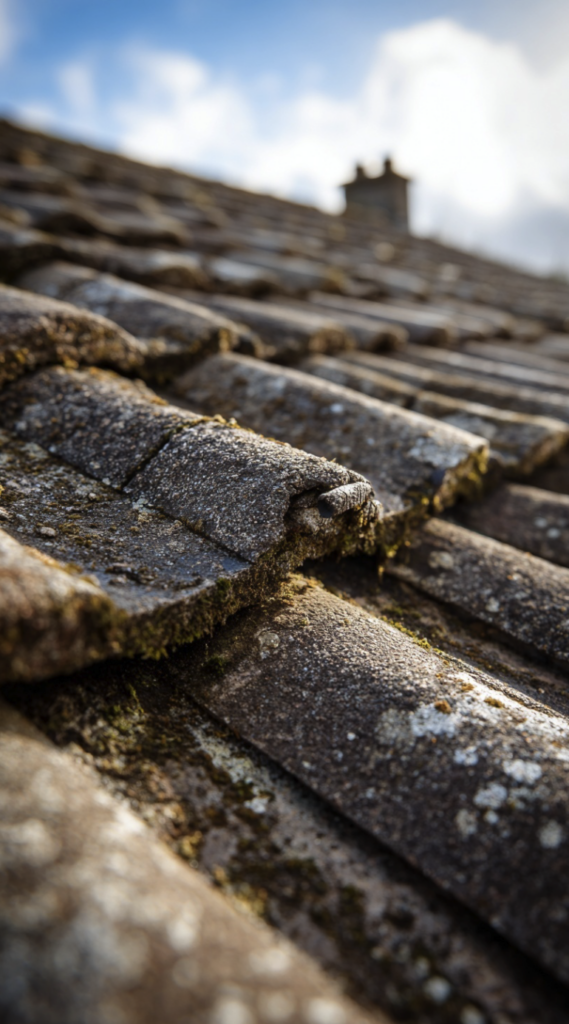
Some moss on roof tiles is fairly common, but excessive growth can cause problems. Moss holds onto moisture, which can eventually damage the surface of the tiles and encourage frost-related cracking in cold weather. Heavy moss and debris can also obstruct drainage routes, causing water to travel where it shouldn’t.
3. Don’t Forget Your Gutters and Roofline
Gutters, fascias and soffits play a key role in keeping water away from your home. If they fail, your roof and walls can quickly suffer.
Overflowing or Leaking Gutters
If water pours over the sides of your gutters during rain instead of flowing neatly to the downpipes, they may be blocked, damaged or incorrectly aligned. Overflowing water can run down your walls, causing stains, damp patches and even foundation issues over time.
Rusty or Loose Gutter Brackets
Check whether your gutters appear to be sagging or pulling away from the house. Loose brackets or fixings can lead to misaligned gutters that don’t drain properly.
Rotting or Peeling Fascias and Soffits
Wooden fascias and soffits can rot if water is allowed to penetrate them. Even with uPVC roofline systems, signs like warping, gaps or staining can indicate that water is not being managed correctly.
4. Early Signs on Flat Roofs
Flat roofs (often found on extensions, garages, dormers and porches) need particular attention. Small issues can escalate quickly if ignored.
Ponding Water
After rain, water should drain from a flat roof within a reasonable time. If you notice pools of standing water that stay for days, it could suggest poor drainage, structural sagging or a failing surface.
Blisters, Cracks or Bubbles
Flat roofing materials can sometimes blister or bubble when moisture gets trapped underneath. Cracks, splits or lifted edges are all early signs of damage that should be checked before they become a leak.
Debris and Blocked Outlets
Leaves, moss and debris can block drains and outlets on flat roofs, causing water to build up. Keeping these clear can significantly reduce the risk of leaks and surface damage.
5. Weather-Related Damage After Storms
Storms, heavy winds and driving rain can all put extra strain on your roof. It’s always a good idea to give your roof a visual check after severe weather.
- Look for newly missing or shifted tiles or slates.
- Check for debris on the ground that might have come from the roof.
- Listen for new drips or drumming sounds in the loft during rain.
- Keep an eye out for new marks or damp patches on ceilings.
If something doesn’t look right, it’s usually best to have it inspected sooner rather than later.
How Our Cherry Picker Helps with Roof Inspections
One of the challenges with roof problems is simply getting a good look at them safely. That’s where our in-house cherry picker and access equipment makes a huge difference.
At Direct Roofing & Cherry Picker Hire, we use our own truck-mounted platform to:
- Carry out close-up roof inspections without expensive scaffolding
- Safely access hard-to-reach areas such as valleys, chimneys and dormers
- Photograph and record the condition of your roof so you can see the issues yourself
- Complete many repairs more quickly and efficiently
This approach keeps costs under control and allows us to respond quickly when you suspect a problem with your roof.
When to Call a Professional Roofer
Not every small mark or bit of moss on your roof means disaster, but there are definite times when it’s wise to bring in an expert. You should contact a roofer if:
- You can see missing, broken or slipped tiles or slates
- There are visible dips or sagging sections of the roof
- Water stains on ceilings keep reappearing or are getting worse
- You notice damp, mould or a musty smell in your loft
- Your gutters, fascias or soffits are clearly damaged or overflowing
- A flat roof shows standing water, cracks, blisters or lifted edges
Attempting roof repairs yourself can be dangerous and may make the problem worse. A qualified roofing team has the right equipment, training and experience to diagnose the problem properly and carry out safe, long-lasting repairs.
How Direct Roofing & Cherry Picker Hire Can Help
We provide a full range of roofing services for homeowners across Surrey, Middlesex, West London and the surrounding areas. From small repairs and detailed inspections to full new roof installations, we focus on quality workmanship, safety and honest advice.
Our own access equipment allows us to:
- Inspect roofs thoroughly without delay
- Reach difficult areas quickly and safely
- Reduce the need for scaffolding on many jobs
- Complete work with minimal disruption to your home
Book a Roof Inspection Before Small Issues Become Big Problems
If you’ve noticed any of the early warning signs in this guide – or if you simply want peace of mind about the condition of your roof – we’re here to help.
Contact Direct Roofing & Cherry Picker Hire today to arrange a roof inspection or discuss any concerns you have.
Catching problems early is the best way to protect your home, your family and your wallet from unexpected roof issues.